

IoT solutions are helping Australian businesses connect vehicles, sensors, machinery, cameras and other physical assets to networks and cloud platforms for real-time monitoring, automation and data-driven decision-making. From fleet management and smart waste systems to agriculture, utilities, construction and remote operations, IoT enables organisations to improve visibility, reduce operational costs and respond to issues faster. With technologies such as 4G, 5G, LPWAN, edge computing, cloud platforms and AI, Australian businesses can build scalable connected environments tailored to their operational needs.
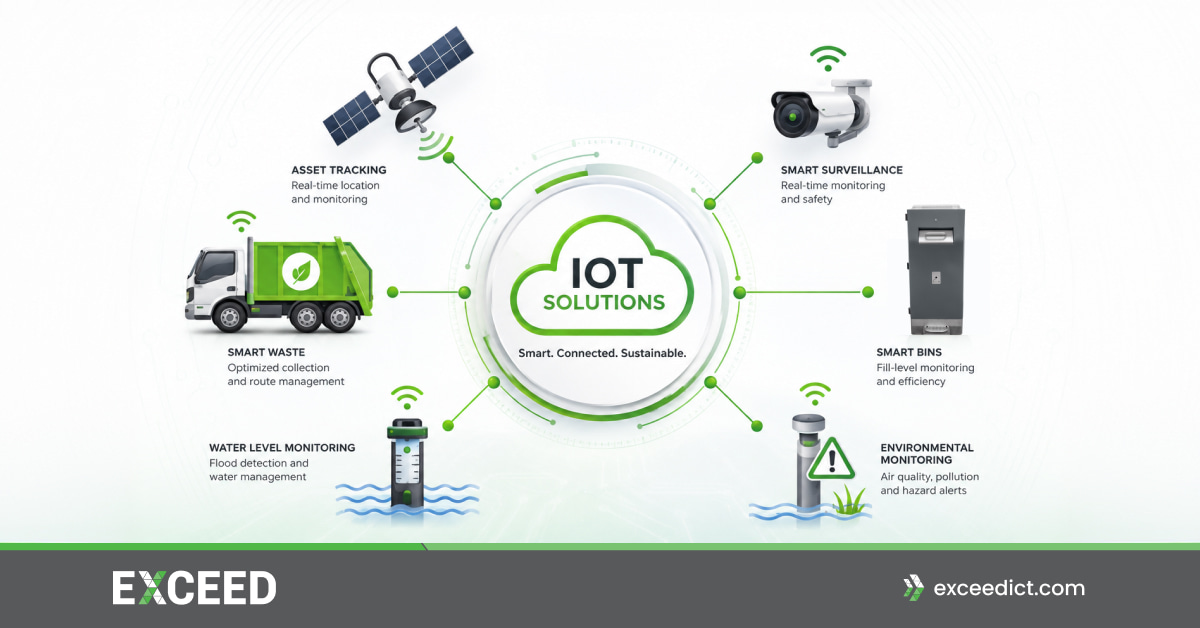
EXCEED ICT provides IoT solutions covering areas such as vehicle telematics, vehicle video monitoring, smart waste management, stormwater monitoring and flood warning systems. Its platform can also integrate multiple IoT feeds to provide organisations with a consolidated view of connected assets and operations.
What Are IoT Solutions?
IoT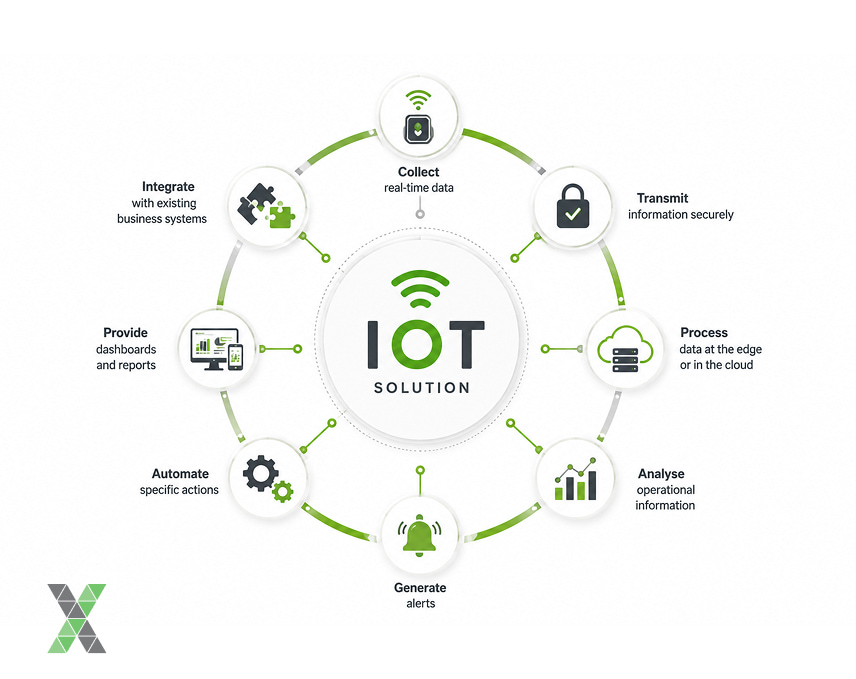 solutions are integrated technology systems that connect physical devices and sensors to networks, software platforms and business applications.
Unlike a standalone sensor that simply records information, an end-to-end IoT solution can:
- Collect real-time data
- Transmit information securely
- Process data at the edge or in the cloud
- Analyse operational information
- Generate alerts
- Automate specific actions
- Provide dashboards and reports
- Integrate with existing business systems
For example, a fleet operator could install telematics devices across its vehicles to monitor location, engine information, fuel consumption and driver behaviour. The information can then be presented through a central dashboard, allowing fleet managers to identify inefficiencies and respond to issues.
How Do IoT Solutions Work?
Although IoT architectures vary according to the application, most solutions follow a basic data lifecycle.
Data Collection
Sensors and connected devices collect information from the physical environment.
Depending on the application, this may include:
- Temperature
- Humidity
- Pressure
- Vibration
- Vehicle location
- Engine diagnostics
- Fuel consumption
- Energy consumption
- Water levels
- Motion
- Occupancy
- Air quality
The device may operate continuously or collect information at defined intervals.
Connectivity
The collected data needs to travel from the device to an application or platform.
Common connectivity options include:
- 4G LTE
- 5G
- NB-IoT
- LTE-M/Cat-M1
- LoRaWAN
- Wi-Fi
- Ethernet
- Satellite connectivity
The right technology depends on factors such as coverage, bandwidth, power consumption, device location and how frequently data needs to be transmitted.
For businesses operating across regional and remote Australia, connectivity planning is particularly important. IoT systems may need to combine cellular, low-power networks or satellite connectivity depending on the operating environment.
Edge Processing
Some IoT systems process information close to where it is generated rather than sending every data point to a cloud platform. This is known as edge computing.
Edge processing can help businesses:
- Reduce latency
- Reduce unnecessary data transmission
- Respond to events quickly
- Continue selected operations during connectivity interruptions
- Process data locally before sending relevant information to the cloud
This can be particularly useful for industrial equipment, connected vehicles, remote infrastructure and safety applications.
Cloud Processing and Analytics
After data reaches the IoT platform, software can organise, analyse and visualise the information.
Businesses can use cloud platforms to:
- Monitor assets
- View live dashboards
- Analyse historical trends
- Configure alerts
- Generate reports
- Identify anomalies
- Integrate data with other applications
- Support predictive maintenance
Automated Action
The final stage is turning information into an action. For example, an IoT system could detect an abnormal temperature and automatically send an alert to an operations team.
Other automated responses might include:
- Creating a maintenance request
- Alerting a fleet manager
- Activating equipment
- Adjusting building systems
- Triggering a warning
- Recording a compliance event
- Dispatching a technician
This is where IoT moves beyond simple monitoring and becomes an operational tool.
Core Components of an IoT Solution
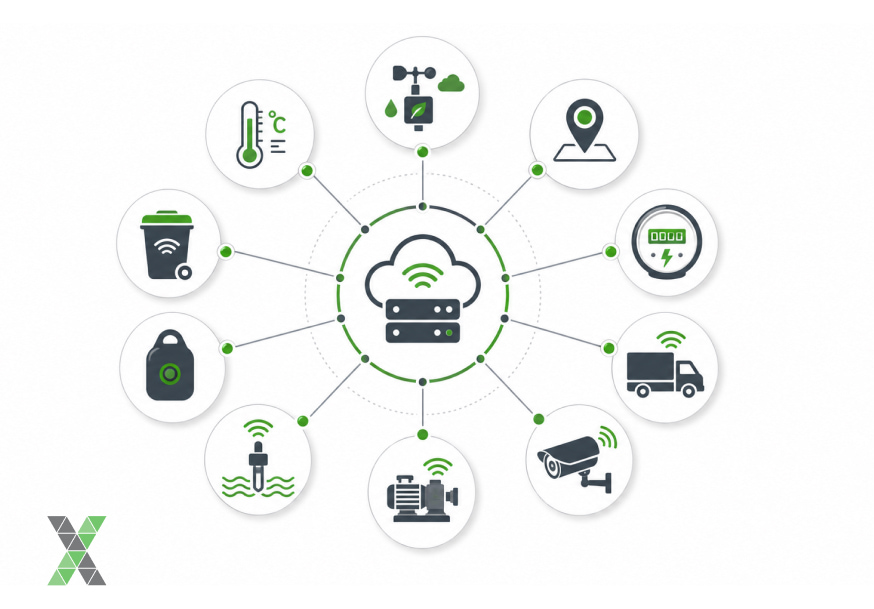 A successful IoT deployment normally combines several technology layers.
Connected Devices and Sensors
Sensors are the foundation of an IoT system. They measure physical conditions and convert them into digital information.
Examples include:
- Environmental sensors
- GPS trackers
- Smart meters
- Vehicle telematics devices
- AI cameras
- Industrial sensors
- Water-level sensors
- Temperature sensors
- Asset trackers
- Smart bins
The choice of sensor depends on what the business needs to monitor.
IoT Gateways
An IoT gateway sits between connected devices and the wider network or cloud platform.
A gateway can:
- Aggregate information from multiple sensors
- Convert communication protocols
- Filter data
- Process information locally
- Manage device communication
- Improve network security
Gateways are particularly useful when organisations have multiple types of sensors operating across a site.
Connectivity
Connectivity determines how devices communicate with the IoT platform. There is no single network technology suitable for every IoT application.
4G and 5G
Cellular connectivity can support applications requiring reliable wide-area communications and higher data throughput.
NB-IoT and LTE-M
Low-power cellular technologies can be suitable for devices that transmit relatively small amounts of data and need long battery life.
LoRaWAN
LoRaWAN can be useful for low-power sensors requiring long-range connectivity, particularly across buildings, facilities and certain industrial environments.
Satellite
Satellite connectivity can provide an option for remote areas where terrestrial networks are unavailable or unsuitable.
Australian businesses operating in remote areas may benefit from combining multiple connectivity technologies rather than relying on a single network. EXCEED ICT, for example, provides connectivity solutions incorporating 4G/5G and satellite technologies for demanding and remote environments.
Major Business Applications of IoT Solutions
IoT can be applied across almost every industry where physical assets, infrastructure or environments need to be monitored.
Fleet Management and Connected Vehicles
Fleet operators can use IoT technology to monitor vehicles in real time.
Connected vehicle solutions can collect information such as:
- GPS location
- Vehicle speed
- Engine diagnostics
- Fuel consumption
- Driver behaviour
- Vehicle utilisation
- Maintenance information
When combined with video telematics, businesses can gain additional visibility into driving events and road incidents.
EXCEED ICT offers vehicle telematics and vehicle video monitoring as part of its IoT solutions portfolio.
Business benefits include:
- Better fleet visibility
- Improved driver safety
- More efficient vehicle utilisation
- Proactive maintenance
- Reduced unnecessary fuel consumption
- Better operational reporting
Industrial IoT and Manufacturing
Industrial IoT, commonly known as IIoT, connects machinery, production equipment and industrial infrastructure.
Sensors can monitor:
- Vibration
- Temperature
- Pressure
- Machine operating conditions
- Energy consumption
- Production performance
The data can help identify abnormal conditions before equipment fails.
Predictive Maintenance
Traditional maintenance often follows fixed schedules. IoT enables a more data-driven approach. For example, if vibration sensors detect an unusual pattern in a motor, the system can alert maintenance personnel to investigate the equipment before a major failure occurs.
This can help reduce unplanned downtime and improve asset utilisation.
Smart Buildings
IoT can transform commercial buildings into connected environments.
Smart building systems can monitor:
- Occupancy
- Temperature
- Air quality
- Lighting
- Energy consumption
- HVAC performance
- Equipment status
Building managers can use this information to optimise energy usage and improve occupant comfort.
For example, lighting and HVAC systems can be adjusted based on occupancy rather than operating at full capacity throughout the day.
Smart Waste Management
Waste management is another practical IoT application. Connected waste bins can use sensors to determine fill levels and transmit information to a central platform. Instead of collecting every bin according to a fixed schedule, waste operators can use real-time information to improve collection planning.
Potential benefits include:
- More efficient collection routes
- Reduced unnecessary vehicle trips
- Better fleet utilisation
- Improved service visibility
- Lower operational costs
EXCEED ICT’s IoT portfolio includes smart waste management solutions such as WasteMate smart bins and Matter Waste Intelligence.
Flood and Stormwater Monitoring
IoT sensors can also support environmental monitoring. Water-level and stormwater sensors can provide real-time information about changing conditions.
When connected to alerting platforms, these systems can help organisations monitor:
- Water levels
- Drainage infrastructure
- Flood risks
- Stormwater conditions
- Environmental changes
EXCEED ICT lists FloodFinder and Matter Stormwater among its IoT solutions for environmental monitoring.
Agriculture
Australian agriculture covers large geographical areas, making remote monitoring particularly valuable.
IoT sensors can monitor:
- Soil moisture
- Temperature
- Weather conditions
- Water levels
- Livestock location
- Equipment
- Irrigation systems
Farmers can use these insights to make irrigation and resource-management decisions based on actual conditions rather than manual observations alone.
Logistics and Supply Chain
IoT can provide greater visibility across logistics operations. GPS trackers can monitor vehicle and asset locations, while environmental sensors can monitor conditions such as temperature and humidity.
This is particularly relevant to industries transporting:
- Food
- Pharmaceuticals
- Medical products
- Temperature-sensitive goods
- High-value equipment
Real-time alerts can help teams respond when conditions move outside defined thresholds.
Utilities and Infrastructure
Utilities can deploy IoT sensors across distributed infrastructure to monitor equipment and environmental conditions.
Applications can include:
- Water infrastructure
- Energy monitoring
- Pump stations
- Remote equipment
- Environmental monitoring
- Infrastructure condition monitoring
IoT can reduce the need for frequent physical inspections while providing more continuous visibility.
Benefits of IoT Solutions for Australian Businesses
Improved Operational Visibility
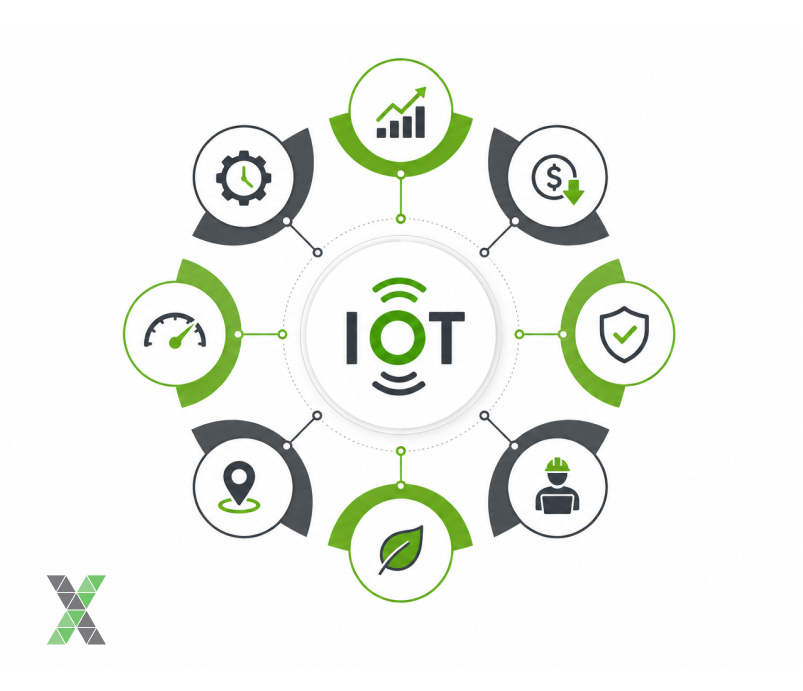 IoT provides access to real-time information about assets and operations. Instead of relying entirely on manual reports, businesses can see what is happening across multiple locations from a central platform.
Reduced Operational Costs
IoT can identify inefficient processes, unnecessary vehicle use, excessive energy consumption and maintenance issues. The resulting insights can help organisations make more informed decisions about resource allocation.
Predictive Maintenance
Connected sensors can identify changes in equipment behaviour before a major failure occurs. This can help businesses move from reactive maintenance towards condition-based and predictive approaches.
Improved Safety
IoT can monitor vehicles, equipment and environmental conditions continuously. Alerts can be generated when predefined thresholds are exceeded, allowing teams to respond more quickly.
Automation
IoT can automate repetitive monitoring and operational tasks. This reduces dependence on manual data collection and allows employees to focus on higher-value activities.
Better Decision-Making
The value of IoT is not simply the volume of data collected. The objective is to convert that data into useful business intelligence. Dashboards, analytics and AI can help organisations identify trends and make decisions based on actual operational information.
IoT Solutions and AI
The combination of IoT and artificial intelligence is creating new opportunities for automation and predictive analytics. IoT devices generate large amounts of operational data. AI and machine learning can analyse this information to identify patterns that may not be obvious through manual analysis.
Potential applications include:
- Predictive maintenance
- Driver behaviour analysis
- Automated anomaly detection
- Demand forecasting
- Intelligent route optimisation
- Energy optimisation
- Automated alerts
For example, an IoT platform could identify an unusual pattern in machine vibration and use historical information to determine whether the condition is likely to indicate an upcoming equipment failure.
IoT Security: What Businesses Need to Consider
The more devices an organisation connects, the greater the importance of cybersecurity. An IoT deployment should consider security across the entire technology stack.
Important measures include:
Device Authentication: Only authorised devices should be permitted to connect to the IoT environment.
Encryption: Data should be protected while it is transmitted and stored.
Access Controls: Users should only have access to the systems and information required for their role.
Firmware Management: Connected devices should be maintained with appropriate firmware and security updates.
Network Monitoring: Businesses should monitor connected environments for unusual activity.
Secure Device Lifecycle Management: Security should be considered from device deployment through to replacement and retirement.
A secure IoT architecture should therefore be planned before large-scale deployment rather than added after the system has already been implemented.
IoT in Australia: Connectivity and Numbering Considerations
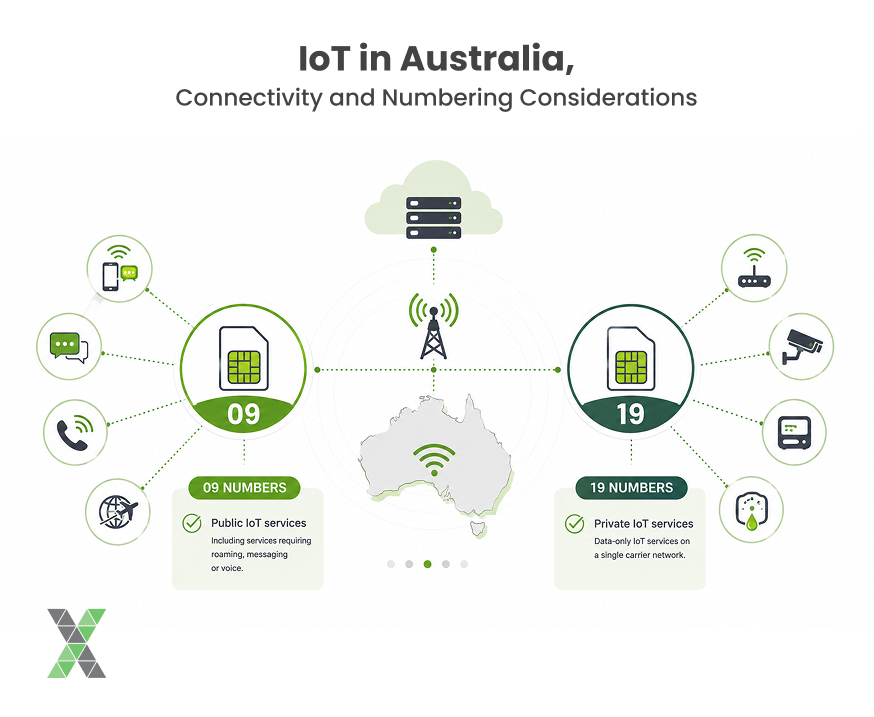 Australia has introduced specific numbering arrangements for IoT services.
The Australian Communications and Media Authority (ACMA) states that 09 numbers are designated for public IoT services, including services requiring roaming, messaging or voice, while 19 numbers are used for private, data-only IoT services on a single carrier network. New IoT services connected from 25 March 2026 are required to use the appropriate IoT numbering arrangement, while eligible services that were already using 04 numbers before that date can continue using them.
For organisations deploying connected devices at scale, this makes it important to consider connectivity, SIM management and regulatory requirements during solution design.
How to Choose the Right IoT Solution
Choosing an IoT platform should start with the business problem rather than the technology.
Consider the following questions:
What Do You Need to Monitor?
Define the physical assets, equipment or environments that require visibility.
What Data Is Required?
Determine which information will actually support business decisions. Collecting unnecessary data can increase costs without creating additional value.
Where Will Devices Operate?
Consider whether devices will operate in:
- Cities
- Regional areas
- Remote sites
- Vehicles
- Industrial facilities
- Underground environments
- Offshore locations
Location will influence connectivity requirements.
How Frequently Does Data Need to Be Transmitted?
Some applications require near-real-time information, while others only need periodic updates.
What Happens When a Problem Is Detected?
Define the required response. An alert may be enough for some applications, while others may require automatic actions.
Can the Solution Scale?
A pilot may begin with 20 devices but eventually grow to thousands. Choose architecture, connectivity and device management capabilities that can support future growth.
How Will the Data Integrate With Existing Systems?
The IoT platform should ideally connect with existing business applications, dashboards, fleet systems, maintenance platforms or enterprise software.
A Practical IoT Deployment Strategy
A successful IoT project does not necessarily need to begin with a large-scale rollout.
Step 1: Identify a Business Problem
Start with a measurable challenge.
For example:
How can we reduce unnecessary fleet kilometres?
or:
How can we identify equipment faults before they cause downtime?
Step 2: Select the Right Sensors
Choose devices that collect only the data required to address the problem.
Step 3: Select Connectivity
Compare cellular, LPWAN, Wi-Fi, Ethernet and satellite options according to the deployment environment.
Step 4: Run a Pilot
Test the technology with a limited number of devices.
This allows the organisation to evaluate:
- Connectivity
- Data quality
- Battery performance
- Hardware reliability
- User experience
- Business value
Step 5: Integrate the Data
Connect the IoT platform with relevant business systems.
Step 6: Measure ROI
Track measurable outcomes such as:
- Reduced downtime
- Lower fuel consumption
- Reduced maintenance costs
- Improved asset utilisation
- Reduced manual work
- Improved safety outcomes
Step 7: Scale
Once the solution demonstrates measurable value, expand it across additional sites, assets or business units.
Why an IoT Platform Matters
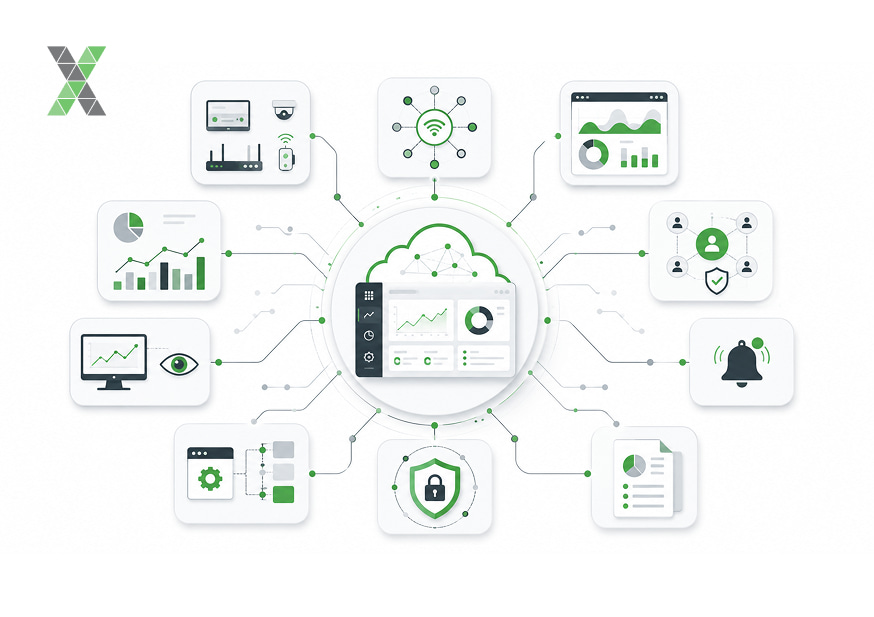 Deploying thousands of connected devices without central management can create another operational challenge. An IoT platform provides a central environment for managing connected devices, data and applications.
A mature platform can provide:
- Device management
- Connectivity management
- Data visualisation
- User access management
- Alerts
- Reporting
- API integration
- Remote monitoring
- Analytics
- Security controls
EXCEED ICT states that it can consolidate multiple IoT platforms into a single view, helping organisations gain visibility across different connected technologies. This approach can be particularly useful for organisations managing multiple IoT applications rather than a single connected-device project.
IoT Solutions for Remote and Distributed Operations
Australia presents unique connectivity challenges because businesses may operate across very large geographical areas. Mining operations, agriculture, transport companies, utilities and emergency-response organisations may need connected technology in locations where conventional fixed broadband is unavailable.
A resilient IoT architecture can combine technologies according to the environment.
For example:
Sensor → Gateway → 4G/5G → Cloud Platform
or, for a remote environment:
Sensor → Gateway → Cellular/Satellite → Cloud Platform
For broader business connectivity, EXCEED ICT also provides rapidly deployable connectivity solutions combining 4G/5G and satellite technologies for remote operations and disaster recovery scenarios
The Future of IoT Solutions in Australia
IoT is moving beyond simple asset tracking and basic sensor monitoring. Several technologies are expected to shape the next stage of connected business operations.
- AI-Powered IoT: AI will increasingly analyse IoT data to detect anomalies, predict failures and automate decisions.
- Edge Computing: More processing will occur closer to the connected device, supporting faster responses and reducing unnecessary cloud traffic.
- 5G and Advanced Connectivity: Higher-speed cellular networks can support more demanding applications, including connected vehicles, video analytics and industrial systems.
- Digital Twins: Businesses can use digital representations of physical assets to model performance and identify potential problems.
- Connected Vehicles: Vehicles are increasingly becoming data-generating platforms capable of supporting telematics, video monitoring, safety applications and broader connected-vehicle services.
- Integrated IoT Platforms: Rather than managing each IoT deployment independently, organisations will increasingly seek centralised platforms that bring multiple data sources together.
Why Partner With EXCEED ICT for IoT Solutions?
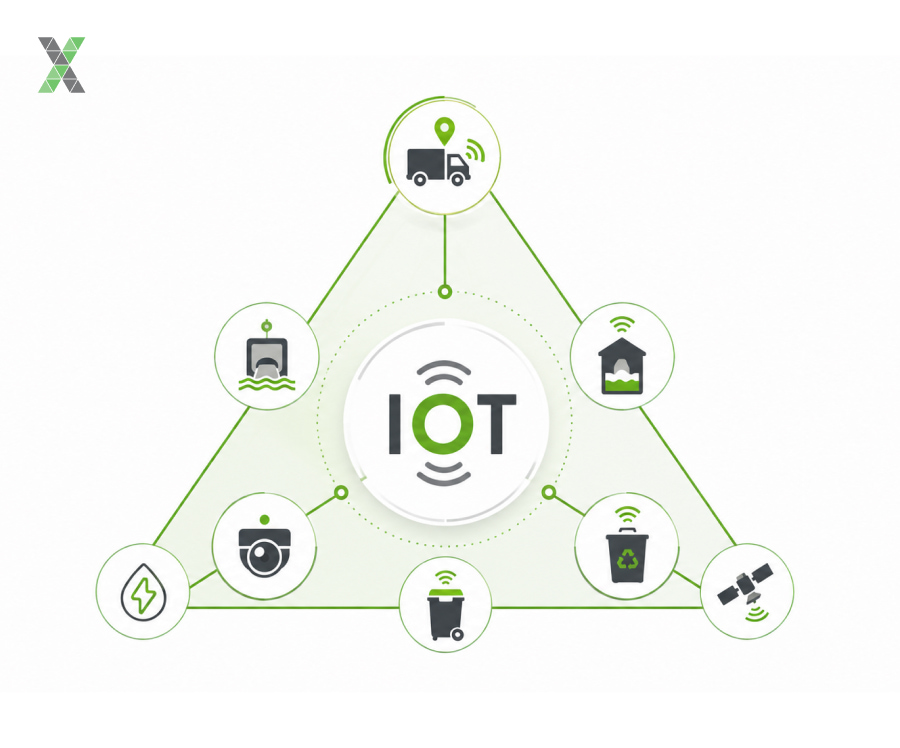 Successful IoT deployment requires more than purchasing sensors. Businesses need to consider hardware, connectivity, platform integration, cybersecurity, analytics, device management and ongoing support.
EXCEED ICT provides IoT solutions across areas including:
- Vehicle telematics
- Vehicle video monitoring
- Smart waste management
- Smart bins
- Stormwater monitoring
- Flood warning
- IoT helpdesk services
- Fleet management
- Connected vehicle solutions
- Enterprise connectivity
The company states that it consults on, designs, delivers and supports IoT solutions for organisations seeking better productivity, insights and operational efficiency. Its broader solution portfolio also combines IoT with connectivity, mobility and managed services, allowing businesses to approach connected technology as part of a wider digital transformation strategy.
Conclusion
IoT solutions are becoming an important part of modern business infrastructure in Australia. By connecting physical assets, sensors, vehicles, infrastructure and equipment to secure networks and intelligent software platforms, organisations can gain real-time visibility into their operations.
The greatest value comes when IoT data is connected to business processes. Instead of simply collecting information, organisations can use that information to automate workflows, improve safety, optimise resources, predict maintenance requirements and make better operational decisions.
For Australian businesses, the key is to start with a clear operational problem, select appropriate devices and connectivity, secure the environment, prove value through a pilot and then scale the solution.
EXCEED ICT can help organisations design, deploy and manage connected IoT environments that bring devices, connectivity, data and business operations together.
Ready to Build Your IoT Strategy?
Connect your business assets, vehicles and infrastructure with a scalable IoT solution designed around your operational requirements. Contact EXCEED ICT to discuss your IoT, connectivity, fleet or smart infrastructure requirements.
Call us on 1300 832 639 or simply search “Exceed ICT” on Google Maps to find a location near you and connect with our team today.
We also provide Managed Services, Asset Management, IoT Helpdesk, Fleet Management, Project Management, Telecoms Expense Management.
Improve Your Business Core values, Business Consulting, Network Management, Telstra Adaptive Mobility, Device Enrolment, and many more Solutions.
Find us (Exceed ICT) on Google map.